Easy aquarium plants for beginners

The easiest aquarium plants for beginners to start with are anubias, cryptocoryne wendtii and hornwort: one is tied on, one roots in the substrate, and one grows fast to soak up waste. The one rule that catches beginners: anubias and java fern must be tied to rock or wood, never buried.

Edited by Marin Hale · Research is AI-assisted; every value cites its sources below · Prices checked November 16, 2026

Start with these three

Together they cover the three kinds of plant you'll meet: one that's tied on, one that roots in the substrate, and one fast grower that soaks up waste while the slow two settle in. Anubias and the crypt stay small enough for the tanks our starter sets use; in a tank that small, plan to trim the hornwort often.

Shopping list: Buy one pot or bunch of each. For the crypt in plain gravel or sand, add a root tab; to fix the anubias to a rock, use thread or gel super glue. Those two aren't in the price. The three plants cost about $27 together.

Sources

aquariumcoop.com: “Fast-growing plants like hornwort are good at “cleaning” aquarium water because they consume waste compounds from the water”

aquariumcoop.com: “Because it grows so quickly, it’s best to use it as a background plant in larger tanks (unless you have the time to constantly trim it)”

buceplant.com: “Insert root tab fertilizers if using an inert substrate like sand or gravel”

aquariumcoop.com: “Insert each plant clump between a crack in a rock or more firmly attach them to decor using super glue gel”

What these plants need

LightThe starter trio tolerates low light. For the other plants, check the light requirement on each card before choosing your light. Run it on a timer: start at 5–6 hours a day, and keep it to 6–8 hours once plants are growing, because more light mostly feeds algae.
Food for plantsPlants that root in the substrate, like crypts and swords, feed mostly through their roots: push a root tab into plain sand or gravel near them. Plants that float or are tied on take food from the water; if they turn pale or stop growing, add an all-in-one liquid fertilizer.
CO2None of these need added CO2. It only speeds some of them up; the plants that truly need it, with very bright light, aren't on this page.
Words you’ll see below
Substrate
The sand or gravel on the bottom of the tank.
Rhizome
The thick, creeping stem that anubias and java fern grow from. It must stay uncovered: tie or glue it to a rock or wood.
Crown
The point where a rosette plant's leaves meet its roots. Bury the roots, not the crown.
Root tab
A small fertilizer capsule you push into plain sand or gravel near a rooted plant.
Melting
A new plant dropping the leaves it grew out of water while it grows underwater ones. Usually normal; see the first month below.
Sources

aquariumcoop.com: “Therefore, program the timer for only 5-6 hours per day at first”

buceplant.com: “Stick to moderate light levels (No more than 6-8 hours per day)”

aquariumcoop.com: “If you have rooted plant such as crypts, swords or bulb plants, using a nutrient-rich aqua soil or a substrate supplement like Easy Root Tabs can be a great option”

aquariumcoop.com: “If you notice your plant is struggling to grow, pale in color, or losing leaves one after another, consider regularly dosing with Easy Green all-in-one liquid fertilizer”

aquariumcoop.com: “Highly demanding or “difficult” plants will need CO2, plenty of nutrients, and very bright lighting to thrive”

buceplant.com: “Insert root tab fertilizers if using an inert substrate like sand or gravel”

aquariumcoop.com: “Be careful not to bury the rhizome or the plant may suffer.”

aquariumcoop.com: “The emersed-grown leaves are used to taking light and CO2 from the air, so once the plant is kept submerged underwater, it has to adapt and grow new leaves”

Why plants?

They use up fish wastePlants feed on the same waste that fish put into the water, so they help keep it clean.
Sources

aquariumcoop.com: “Not only do they add a natural beauty to your tank, but they also help consume toxic waste chemicals and purify the water for your fish”

They hold back algaePlenty of plants take the food that algae would otherwise live on. Fast growers do this best.
Sources

aquariumcoop.com: “Having a large density of plant mass helps to use up the available nutrients in the tank and decrease algae growth”

aquariumcoop.com: “As a fast-growing plant, it is often used to consume nitrogen waste compounds in the water and outcompete algae growth”

They give fish somewhere to hideShy fish and baby fish shelter in plants, and floating roots make good cover.
Sources

aquariadise.com: “Also, the moss offers shelter for shy fish and fry”

aquariadise.com: “the long, thread-like roots make an excellent shelter plant for small fish underneath”

All 12 plants

All 12 plants

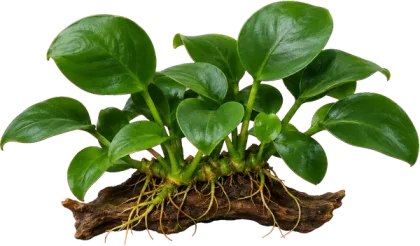
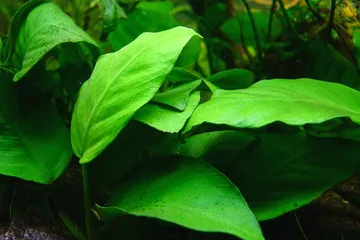
Anubias barteri var. glabra.

Anubias

Anubias barteri · also sold as anubias nana, anubias barteri
Light
Low to medium
Growth
Slow
Goes
Middle, Back, On rocks and wood†
Height
4–6 in†
Price
About $10 a pot or bunch

Tie to rock or wood: don't bury. Don't bury the thick stem (the rhizome). Glue or tie it onto a rock or piece of wood, or wedge it into a crack. If you set it in sand or gravel, only the roots go down; the stem stays on top.

Watch for: It grows very slowly, so don't worry if it seems to sit there for weeks before putting out new leaves, and keep it out of bright light, which tends to invite algae on the leaves.

Sources

Light: 2hraquarist.com: “grows in low light, from as little as 10 µmol PAR.” · buceplant.com: “Light Requirement Low to Medium” · aquariumcoop.com: “Recommended Light: Low Light 10-20 PAR (click to see our PAR chart)”

Growth: 2hraquarist.com: “Anubias is a hardy, slow-growing African epiphyte.” · buceplant.com: “Slow (1 leaf every 2-3 weeks)” · aquariumcoop.com: “Anubias Nana is rather slow growing and will thrive in low light or shaded areas of your aquarium.”

Planting: 2hraquarist.com: “hardy, shade-tolerant epiphytes that attach to wood or rock instead of being planted.” · buceplant.com: “Attach to hardscape using aquarium‑safe glue or thread; keep the horizontal rhizome completely above substrate to prevent rot.” · aquariumcoop.com: “Placement: Attach to rocks, wood, or decor”

Where it goes (one source): buceplant.com: “Midground Crevices, Background Accent”

Height (one source): buceplant.com: “Height / Size 4 – 6 inches”

aquariumcoop.com: “Be careful not to bury the rhizome or the plant may suffer.”

2hraquarist.com: “roots into the soil, rhizome clear.”

aquariumcoop.com: “this slow-growing plant can take several weeks to get used to a new environment and start sprouting new leaves.”

aquariumcoop.com: “Too much light may cause excess algae growth”

Photo: en:User:Tsunamicarlos, Public domain, cropped and resized.
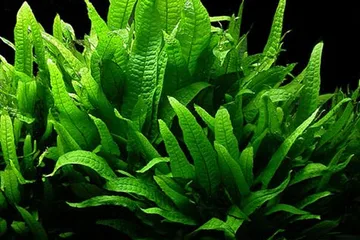
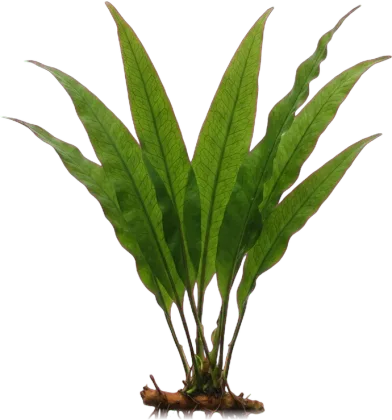
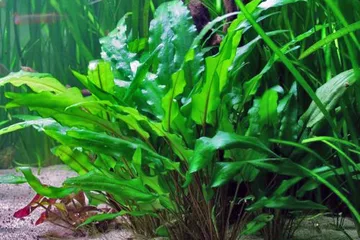
Java fern (Microsorum pteropus)

Java fern

Microsorum pteropus · also sold as Leptochilus pteropus
Light
Low to medium
Growth
Slow
Goes
Back, On rocks and wood, Middle
Height
About 14 in
Price
$8–10 a pot or bunch

Tie to rock or wood: don't bury. Tie or glue it onto a piece of rock or driftwood rather than burying it, and keep the thick stem it grows from uncovered so it can breathe.

Size: Slow, so size isn't urgent; for a small tank, look for a dwarf variety.

Watch for: Dark spots on the leaves are often just the plant making baby plants, but if leaves turn mushy, brown or see-through, your light may be too strong.

Sources

Light: 2hraquarist.com: “Use low to medium light that matches shade plants.” · aquariumsource.com: “it does best with low to moderate light levels.” · buceplant.com: “Java Fern prefers low to moderate lighting.” · aquariadise.com: “they do not need much lighting at all.”

Growth: 2hraquarist.com: “and its varieties are slow growers.” · aquariumsource.com: “it has a slow growth rate.” · buceplant.com: “Java Fern grows slowly but steadily” · aquariadise.com: “Although it grows relatively slowly”

Planting (sources differ; we show the middle): 2hraquarist.com: “It can be flexibly used either on the substrate or attached to hard scape.” · aquariumsource.com: “you must attach it to a piece of rock or driftwood.” · buceplant.com: “Do not plant it directly in the substrate.” · aquariadise.com: “Java ferns don’t appreciate being planted in the substrate.”

Where it goes: 2hraquarist.com: “Great backbone fern for background areas, driftwood roots and larger planted tanks.” · aquariadise.com: “which makes it a great mid- or background plant”

Height: aquariumsource.com: “A mature Java fern can grow to heights of around 13 inches tall.” · aquariadise.com: “up to around 14 inches (35cm)”

buceplant.com: “Its rhizome (the stem-like structure where leaves grow) must stay exposed, or the plant will rot.”

aquariadise.com: “you can tie your Java fern to a piece of porous rock or driftwood”

aquariumsource.com: “Brown or black spots on Java Fern leaves are often normal spores used for reproduction”

aquariadise.com: “the light you’re using may be a little too strong.”

2hraquarist.com: “Dwarf varietals are suitable for nano tanks, while standard or larger size varietals do well in larger planted aquariums”

Photo: Tsunamicarlos at English Wikipedia, Public domain, cropped and resized.

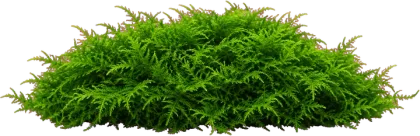
Java moss (Taxiphyllum barbieri)

Java moss

Taxiphyllum barbieri · also sold as Vesicularia dubyana (old name)
Light
Low to high
Growth
Fast
Goes
On rocks and wood
Height
About 4 in†
Price
$8–10 a pot or bunch

Loose, floating or tied on. Tie or glue small pieces onto wood or rock, and don't bury it under gravel. It can also float or sit loose, as long as you keep it away from filter intakes.

Watch for: It grows quickly and can take over your tank or clog the filter, so expect to trim it more often than you'd think.

Sources

Light: aquariadise.com: “Java moss grows in all light conditions from low to high.” · buildyouraquarium.com: “Modest aquarium lighting is enough for a low-demand moss setup.”

Growth: aquasabi.com: “It grows fast for a moss; we have determined a growth rate of up to 3 - 4 cm per month.” · aquariumsource.com: “Java moss will grow like crazy, especially when in the proper conditions.”

Planting (sources differ; we show the middle): aquasabi.com: “Attached to hardscape or as a loose thicket, Taxiphyllum barbieri serves well as a natural hiding place” · aquariadise.com: “Java moss for aquarium use can be grown in several ways, depending on how you want to use it in your fish tank.” · aquariumsource.com: “Java moss can also live as a floating plant, should this be the desired look you want in your tank.” · buildyouraquarium.com: “Do not bury the moss under gravel or pack it into a thick ball.”

Where it goes: aquasabi.com: “which makes it an ideal moss for accentuating the hardscape or for hiding technical equipment in the tank” · aquariadise.com: “This delicate plant attaches itself to rocks, driftwood, and artificial aquarium decorations” · aquariumsource.com: “many fish tank owners grow and use it as a carpet or moss wall.” · buildyouraquarium.com: “Spread small portions over suitable wood or rock”

Height (one source): aquariumsource.com: “Healthy Java moss is a bright green and grows to about four inches tall and sometimes just as wide.”

buildyouraquarium.com: “Do not bury the moss under gravel or pack it into a thick ball.”

aquariumsource.com: “String or fishing line can be used to hold the moss to whichever surface is desired.”

aquariumsource.com: “Java moss, if left to grow unchecked, can quickly take over your tank.”

aquariumsource.com: “Because of the rapid growth rate, new owners are often surprised by how much trimming they end up doing.”

Photo: Buchling, CC BY-SA 3.0, cropped and resized.

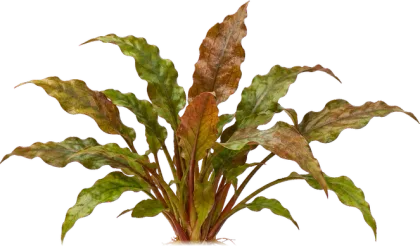
Cryptocoryne wendtii (Cryptocoryne wendtii)

Cryptocoryne wendtii

Cryptocoryne wendtii · also sold as crypt, wendtii
Light
Low to medium†
Growth
Slow
Goes
Front, Middle
Height
5–7 in
Price
About $8 a pot or bunch

Roots go in the substrate. Push the roots down into the substrate, and add a root tab if your sand or gravel is plain. Pick a spot you're happy with from the start, because this plant doesn't like being moved.

Watch for: Don't panic if the leaves turn see-through and drop soon after planting, because it usually grows back once it settles in.

Sources

Light (sources differ; we show the middle): buceplant.com: “Light Requirement Low to Medium” · aquariadise.com: “a location with low light and some shade provided by other floating plants is a good idea.” · dustinsfishtanks.com: “These plants can thrive in high light, but they typically do well in low-light, low-tech setups, too”

Growth: buceplant.com: “Growth Rate Slow to Moderate” · aquariadise.com: “they usually grow quite slow, especially right after planting.” · dustinsfishtanks.com: “crypts are naturally slow growers, so low light tanks might make them even slower.”

Planting: buceplant.com: “Use fine-tip pinsettes to push roots deep into quality aquarium soil, as Crypt species are heavy root feeders.” · aquariadise.com: “you can just plant them in sand or gravel substrate and you’re done!” · dustinsfishtanks.com: “Planting: Plant in the substrate.”

Where it goes: buceplant.com: “Placement / Usage Foreground / Midground Accent” · dustinsfishtanks.com: “Foreground - parva; wendtii”

Height: buceplant.com: “Height 4–8" (10–20 cm)” · aquariadise.com: “C. wendtii: can grow up to 6 inches (15 cm) and has green or reddish-brown leaves”

buceplant.com: “Insert root tab fertilizers if using an inert substrate like sand or gravel.”

buceplant.com: “Choose a permanent spot from day one; moving an established plant will likely trigger leaf loss.”

dustinsfishtanks.com: “they'll drop leaves and turn transparent and just look outright dead, but they'll come back strong”

aquariadise.com: “If your crypts are shedding its leaves, especially right after buying, there is usually no need to worry.”

Photo: Tommy Kronkvist, CC BY 3.0, cropped and resized.

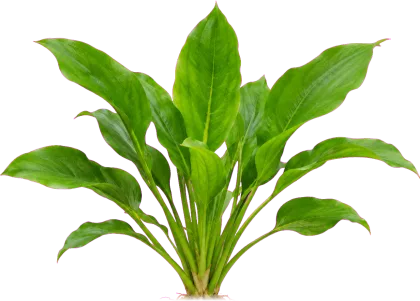
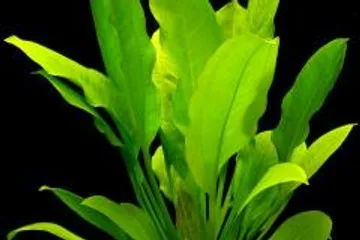
Sold as Echinodorus bleheri, a name used for the Amazon sword.

Amazon sword

Echinodorus grisebachii · also sold as Echinodorus bleheri, Echinodorus amazonicus
Light
Low to medium
Growth
Medium†
Goes
Back
Height
14–16 in
Price
About $8 a pot or bunch

Roots go in the substrate. Press the roots into the substrate and keep the crown, where the leaves sprout, above the surface. Bury only the roots: a buried crown rots.

Size: Gets big: it fits a 10-gallon tank but does better in 20–30 gallons.

Watch for: Don't panic if the leaves it came with drop off after planting; it is just adjusting to life underwater and will grow new ones.

Sources

Light: aquariadise.com: “Lighting: Low to medium” · aquariumsource.com: “These plants only need a moderate amount of light to survive.”

Growth (sources differ; we show the middle): aquariadise.com: “Growth Rate: Moderate to fast” · aquariumsource.com: “they have a slow growth rate”

Planting: aquariadise.com: “Push the roots into the substrate while keeping the crown (where the leaves emerge) above the substrate line.” · aquariumsource.com: “Place the rootstock firmly in the hole and leave the crown visible.”

Where it goes: aquariadise.com: “Placement: Background” · aquariumsource.com: “Many aquarists like to utilize them as background plants.”

Height: aquariadise.com: “A small plant can reach its full size of 16-20+ inches within 6-12 months.” · aquariumsource.com: “The leaves usually reach lengths of about 12 inches.”

aquariadise.com: “Burying the crown will cause rot.”

aquariumsource.com: “Do not bury the root crown. It should be visible after planting.”

aquariadise.com: “Many nursery-grown swords are cultivated emersed (above water) and will shed their emersed leaves as they grow new submersed ones.”

aquariumsource.com: “Amazon swords can grow in small 10-gallon gallon tanks”

aquariumsource.com: “We recommend keeping Amazon swords in an aquarium that holds 20 to 30 gallons instead”

Photo: Salvatore vitale, Public domain, cropped and resized.

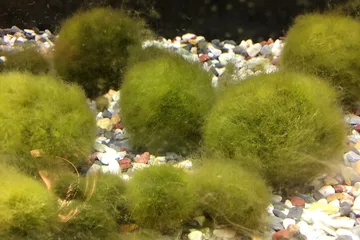
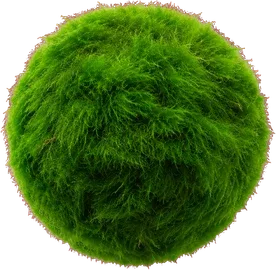
Marimo moss ball (Aegagropila linnaei)

Marimo moss ball

Aegagropila linnaei · also sold as moss ball, marimo
Light
Low to medium†
Growth
Slow

Loose, floating or tied on. There's nothing to plant. Rinse it in some tank water and set it down wherever you like, with no need to bury or attach it.

Watch for: It may float for a while at first, but it should sink once it has soaked up enough water, so don't worry.

Sources

Light (one source): aquariumcoop.com: “They appreciate low to medium light, so keep them out of direct sunlight.”

Growth: aquariumcoop.com: “they grow at the slow, slow rate of 0.2 inches (or 5 mm) per year” · aquariadise.com: “Don’t expect it to grow too quickly, though, marimos are said to only grow 5 mm a year!” · buildyouraquarium.com: “They grow slowly and suit a cool, gently lit display better than a hot aquarium.”

Planting (one source): aquariumcoop.com: “rinse it in aquarium water, place it in the tank, and you’re done! It may float at first but should eventually sink”

aquariumcoop.com: “rinse it in aquarium water, place it in the tank, and you’re done!”

aquariumcoop.com: “It may float at first but should eventually sink once it becomes waterlogged.”

Photo: bryan... from Taipei, Taiwan, CC BY-SA 2.0, cropped and resized.

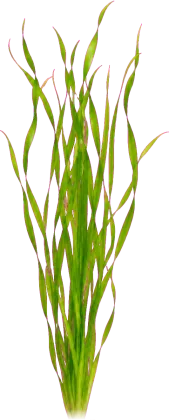
Vallisneria in an aquarium: the tall, grass-like leaves.

Vallisneria

Vallisneria spiralis · also sold as vals, tape grass, Vallisneria americana
Light
Medium to high
Growth
Fast
Goes
Back
Height
8–12 in†
Price
About $8 a pot or bunch

Roots go in the substrate. Push the roots down into the substrate, but keep the base of the leaves above it. If it keeps floating up at first, set a few rocks around it or plant it at an angle until it anchors.

Size: Long leaves trail across the surface: trim them near the base rather than cutting the tips.

Watch for: Store-bought plants often melt back at first, so don't panic when the old leaves die off, because new leaves usually grow in to replace them.

Sources

Light: aquariumcoop.com: “Recommended Light: Medium Light 20-35 PAR” · buceplant.com: “Light Requirement Moderate to High”

Growth: aquariadise.com: “popular for their resemblance of sea grass, quick growth and easy care” · aquariumcoop.com: “val spreads quickly by sending out baby plants via runners” · buceplant.com: “Growth Rate Fast”

Planting: aquariadise.com: “Just stick your Vallisneria into the substrate” · aquariumcoop.com: “push the roots of the plant deeply into the substrate until they are completely buried” · buceplant.com: “Vallisneria should be planted deeply into aquarium soil to ensure they anchor securely”

Where it goes: aquariadise.com: “Vallisneria is mostly a background plant and can be placed at the back of to the sides of your aquarium” · aquariumcoop.com: “Placement: Background” · buceplant.com: “Placement / Usage Background”

Height (one source): buceplant.com: “Height / Size 8–12+ inches”

aquariadise.com: “If you bury the light part at the bottom of the leaves, known as the crown, you may find them dying off after a while.”

aquariumcoop.com: “If the plant keeps popping out of the ground, try inserting the plant at an angle”

aquariumcoop.com: “To help speed up the transition, provide plenty of light and nutrients to encourage new leaves to sprout as the old leaves melt away.”

aquariumcoop.com: “After a good wash and planted into substrate the rest of the old foliage died back and followed by rapid new growth.”

buceplant.com: “Trim overgrown leaves near the base using sharp aquascaping shears rather than topping them”

Photo: Damitr, CC BY-SA 4.0, cropped and resized.

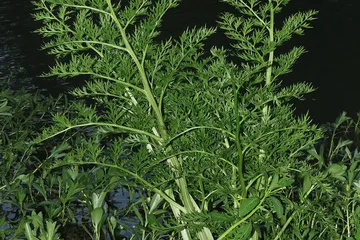
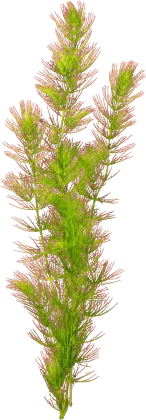
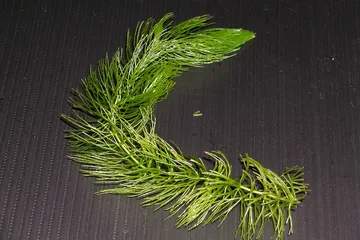
Hornwort (Ceratophyllum demersum)

Hornwort

Ceratophyllum demersum · also sold as coontail
Light
Low to high
Growth
Fast
Goes
Back
Height
About 24 in
Price
About $9 a pot or bunch

Floats at the surface. The easiest way is to let it float at the surface. If you do plant it, remember it has no real roots, so don't push the stem deep or weigh it down tightly.

Size: Grows fast: trim it back so it doesn't shade other plants or cover the surface.

Watch for: It grows very fast and often sheds needles when you first add it, so expect regular trimming and a little cleanup at the start.

Sources

Light: aquariumcoop.com: “It can grow under low to high light and does not require carbon dioxide (CO2) injection.” · aquariadise.com: “Hornwort can successfully be grown under almost all lighting systems, from low to high” · aquariumsource.com: “Hornwort handles 59-82°F, moderate to high light, and water hardness of 5-15 dGH.” · liveaquaria.com: “Lighting: Moderate”

Growth: aquariumcoop.com: “extremely fast growth, and ability to consume excess nutrients from the water” · aquariadise.com: “These fast-growing plants thrive in low tech conditions and can help keep aquariums free of algae.” · aquariumsource.com: “hornwort is a very fast grower” · liveaquaria.com: “Once established, the Hornwort Plant grows quickly to provide much needed shade and protection”

Planting (sources differ; we show the middle): aquariumcoop.com: “Hornwort grows best as a floating plant, where it has greater access to light and carbon dioxide from the air.” · aquariadise.com: “Floating this plant is the preferred method of keeping hornwort” · aquariumsource.com: “hornwort is a plant that can float or be planted.” · liveaquaria.com: “can be treated as a floating plant or potted in small aquatic planters or planted directly in gravel on the pond bottom”

Where it goes: aquariumcoop.com: “it’s best to use it as a background plant in larger tanks” · aquariadise.com: “If you’re going for a lush backdrop, then it would best to plant your hornwort.” · liveaquaria.com: “Placement: Background”

Height: aquariadise.com: “hornwort can easily grow up to 2 feet (61 cm)” · liveaquaria.com: “Maximum Size: 24"”

aquariadise.com: “Floating this plant is the preferred method of keeping hornwort”

aquariumsource.com: “Note that it lacks real roots, so buried stems may rot if weighed down too tightly.”

aquariumcoop.com: “The most common occurrence is when you first add it to your tank and the plant is not used to your water conditions.”

aquariumsource.com: “The main thing you need to keep an eye on when adding hornwort to your aquarium is the insane speed that it grows.”

aquariumcoop.com: “Make sure to prune back your hornwort if it starts growing out of control so that it won’t block out the light”

Photo: S.Tanaka, Public domain, cropped and resized.

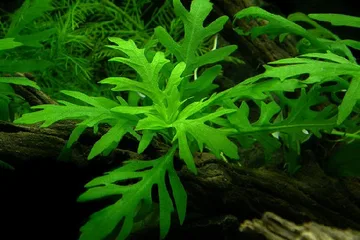
Water wisteria (Hygrophila difformis)

Water wisteria

Hygrophila difformis
Light
Medium
Growth
Fast
Goes
Back, Middle
Height
12–16 in†
Price
$6–8 a pot or bunch

Roots go in the substrate. Separate the stems and push the bottom of each one gently into the substrate, spacing them apart so each has room to root. If you'd rather, you can also just let stems float at the surface.

Size: Fast and big: cut off the top half of the stems and replant the cuttings.

Watch for: The leaves it comes with will turn yellow and melt away soon after planting, but that's a normal adjustment, and new feathery leaves will grow in to replace them.

Sources

Light: 2hraquarist.com: “Water wisteria grows well under with at least moderate lighting conditions” · buceplant.com: “Provide low-to-medium lighting for steady growth, though pressurized CO2 injection will yield faster development.” · aquasabi.com: “Medium lighting is sufficient.”

Growth: aquariumcoop.com: “As a fast-growing plant, it is often used to consume nitrogen waste compounds in the water and outcompete algae growth.” · 2hraquarist.com: “As an aggressive grower, having ample nutrient supply either through the substrate or water column greatly speeds up its growth.” · buceplant.com: “Fast-growing, hardy stem plant that easily adapts to low-tech tanks” · aquasabi.com: “With its fast growth, it is recommendable for newly started tanks where it can compete with algae.”

Planting: aquariumcoop.com: “plunge the base of each stem as deeply as possible into the gravel or substrate.” · 2hraquarist.com: “Remove lower leaves from the bottom 3 cm of stem, then plant cuttings 2-3 cm deep in substrate.” · buceplant.com: “push individual stems 1 to 2 inches into substrate, spacing them apart so light reaches lower growth.” · aquasabi.com: “Just cut off the upper part of the plant and re-plant it into the substrate.”

Where it goes: aquariumcoop.com: “Many people use this bushy species as a background plant in their fish tanks, but you can also plant it in the foreground or midground” · 2hraquarist.com: “Water wisteria can work as a background or midground specimen, where it reaches its eventual height of 20-40 cm.” · buceplant.com: “Background / Midground Bushing” · aquasabi.com: “Hygrophila difformis is especially beautiful in the midground or background of large aquariums”

Height (sources differ; we show the middle): aquariumcoop.com: “can easily grow up to 20 inches tall (51 cm) and 10 inches across (25 cm)” · 2hraquarist.com: “where it reaches its eventual height of 20-40 cm.” · aquasabi.com: “become 6-12 cm wide and at least 30 cm tall.”

aquariumcoop.com: “plunge the base of each stem as deeply as possible into the gravel or substrate.”

aquariumcoop.com: “wisteria can also be grown as a floating plant where it simply rises to the water surface”

aquariumcoop.com: “emersed leaves will start turning yellow and then brown, especially near the bottom of the stems”

2hraquarist.com: “this represents normal adjustment rather than cultivation failure”

aquariumcoop.com: “cut off the top half of the stems and replant the trimmings to propagate the wisteria”

Photo: en:User:Tsunamicarlos, Public domain, cropped and resized.
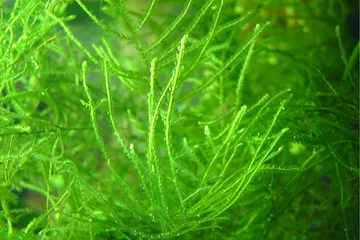
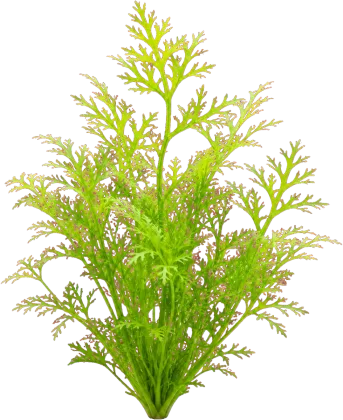
Water sprite (Ceratopteris thalictroides)

Water sprite

Ceratopteris thalictroides · also sold as Indian fern
Light
Medium to high
Growth
Fast
Goes
Back, Surface
Height
About 12 in†
Price
About $8 a pot or bunch

Loose, floating or tied on. You can plant it in the substrate or simply let it float at the surface. If you plant it, keep the center of the plant, where new fronds grow, above the bottom instead of burying it deep.

Size: Grows fast and needs trimming often, or it takes over.

Watch for: Your new plant may shed or melt some leaves at first while it adjusts to life underwater, and it will then grow fast enough to need regular trimming.

Sources

Light: aquariadise.com: “This plant thrives in moderate to high lighting.” · aquariumcoop.com: “Recommended Light: Low to Medium Light 10-35 PAR” · aquasabi.com: “medium light intensities and CO2 concentrations of under 20 mg/l are sufficient, however, the fern will grow better under intensive light”

Growth: aquariadise.com: “Water sprite is also an incredibly fast grower and will need to be trimmed often.” · aquariumcoop.com: “Easy plant that grows quickly” · aquasabi.com: “very fast”

Planting: aquariadise.com: “This plant can either be planted in the substrate or floated at the surface of the water” · aquariumcoop.com: “It can be grown traditionally planted into substrate or used as a floating plant.” · aquasabi.com: “This aquatic fern grows submerged and also as a floating plant.”

Where it goes: aquariadise.com: “placing them at the back will temporarily keep from taking away from valuable swimming space” · aquariumcoop.com: “Placement: Background or floating” · aquasabi.com: “Background, Plant for spawning, Midground, Specimen plant, Water surface”

Height (one source): aquariadise.com: “Water sprite can grow to a foot (30.5 cm) or more”

aquasabi.com: “The "heart" of the plant where new fronds develop should remain above the bottom surface.”

aquariumcoop.com: “It can be grown traditionally planted into substrate or used as a floating plant.”

aquariumcoop.com: “The plant you receive may be half-converted and still need time to adjust to life under water.”

aquariadise.com: “Water sprite is also an incredibly fast grower and will need to be trimmed often.”

aquariadise.com: “Water sprite is also an incredibly fast grower and will need to be trimmed often”

Photo: chiuluan, CC BY-SA 4.0, cropped and resized.

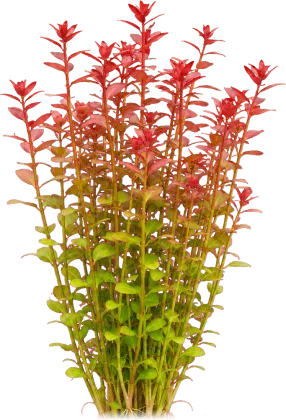
Grown out of water (emersed). Underwater, the leaves grow narrower.

Rotala

Rotala rotundifolia · also sold as dwarf rotala, Rotala indica (trade name)
Light
Medium to high
Growth
Fast†
Goes
Back, Middle
Height
8–31 in†
Price
$7–8 a pot or bunch

Roots go in the substrate. Push the stems gently into the substrate, spacing them slightly apart so light can reach the lower leaves.

Size: Keeps growing up to the light: cut the tops off and replant them, and the cut stems branch out.

Watch for: Keep conditions steady after planting, because sudden changes can make leaves melt, and crowded or shaded lower leaves will drop over time.

Sources

Light: 2hraquarist.com: “However, it will still grow even if light levels are moderate.” · buceplant.com: “Medium to High” · aquasabi.com: “a rather undemanding plant that does well under medium light”

Growth (sources differ; we show the middle): 2hraquarist.com: “Rotala rotundifolia is a fast-growing aquarium plant that has long been popular in the planted aquarium world.” · buceplant.com: “Moderate to Fast”

Planting: buceplant.com: “Use fine-tip pinsettes to push individual stems 1 to 2 inches into substrate” · aquasabi.com: “cuttings of lateral or top shoots that are simply replanted into the substrate”

Where it goes: buceplant.com: “Background / Midground Bushing” · aquasabi.com: “Rotala rotundifolia is best placed in the middle- or in the background of a tank.”

Height (one source): aquasabi.com: “20 - 80cm”

buceplant.com: “Use fine-tip pinsettes to push individual stems 1 to 2 inches into substrate, spacing them slightly apart so light reaches lower leaves.”

aquasabi.com: “cuttings of lateral or top shoots that are simply replanted into the substrate”

buceplant.com: “Maintain stable water parameters and avoid drastic environmental changes to prevent leaf melt or stem rotting.”

2hraquarist.com: “Overgrowth shades the lower leaves, and shaded leaves drop, so a bush left too long hollows out from below.”

2hraquarist.com: “Propagate by topping healthy stems and replanting”

Photo: Krzysztof Ziarnek, Kenraiz, CC BY-SA 4.0, cropped and resized.

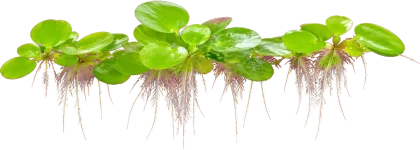
Amazon frogbit (Limnobium laevigatum)

Amazon frogbit

Limnobium laevigatum · also sold as frogbit
Growth
Fast
Goes
Surface†

Floats at the surface. There's no planting needed: just let it float on the surface. Keep it out of strong currents and away from any glass lid, and make sure the leaves stay on top of the water rather than submerged.

Watch for: It multiplies quickly and can blanket the surface, shading everything below, so plan to scoop out extras and trim the long roots now and then.

Legal note, California: Amazon frogbit is prohibited from entering California: the state lists it (as Limnobium laevigatum, South American spongeplant) as an A-rated noxious weed, and A-rated pests are prohibited from entering the state. (California noxious weed list, what an A rating means; checked November 18, 2026)

Legal note, Washington: Amazon frogbit is on Washington’s prohibited plant list: it is illegal to buy, sell or bring it into the state. (Washington prohibited plant list; checked November 18, 2026)

Sources

Growth: aquasabi.com: “Fast-growing floating plant” · aquariadise.com: “Amazon Frogbit can grow at an impressive rate”

Planting: aquasabi.com: “is a floating plant that looks a bit like a very large duckweed” · aquariadise.com: “Since it is a floating plant, Amazon Frogbit can obtain much of its CO2 from the air” · aquariadise.com: “If you’re looking for the classic floating plant with large rosettes and beautiful long roots, this is it.” · ca.aquariumsource.com: “Amazon frogbit is an extremely popular floating plant”

Where it goes (one source): aquasabi.com: “Water surface”

aquasabi.com: “Limnobium laevigatum should not be kept under a glass cover.”

aquariadise.com: “always make sure that leaves are placed above the water”

aquasabi.com: “carpets of these plants will form after a relatively short time, which may lead to uncalled-for shading of the ground”

aquariadise.com: “Its fast growth rate and ability to cast heavy shade over the aquarium means that it usually requires some management to keep it in check.”

Photo: Cardex, Public domain, cropped and resized.
† One source only, or sources disagree. Each card’s “Sources” shows the quotes.

The first month: normal or a problem?

New plants often look worse before they look better. Here’s what’s normal, and what to do.

What you seeIs it normal?What to do
Leaves go see-through, soggy and fall apart (crypts, water wisteria, vallisneria)Usually normal: the plant is swapping the leaves it grew out of water.Cut off leaves that are clearly melting, at the base. Don't move the plant. New shoots usually show within a few weeks.
Hornwort drops needlesCommon after a move or a change in the water.Vacuum up the fallen needles. If it keeps shedding, give it gentler flow and more light.
Anubias or java fern does nothing for weeksNormal: they're slow.Leave them. Check the thick stem is uncovered and tied on, not buried.
Green spots or fuzz on old leaves of slow plantsA sign of too much light or nutrients for how fast they grow.If your light runs longer than the daily schedule above, shorten it to that schedule. If you already follow the starting schedule, do not increase the hours to treat algae. Keep up water changes and remove algae from the leaves.
Rotten leaves piling upNot something to leave.Remove dead leaves; rotting leaves can feed algae and cause spikes in the water.
Sources

aquariumcoop.com: “As long as it has healthy roots and is not moved once planted, you should see little shoots popping up within a few weeks”

aquariumcoop.com: “Also, it doesn’t hurt to remove leaves that are clearly melting”

aquariumcoop.com: “Hornwort sheds needles anytime there’s a major change in water parameters or it’s kept in an unfavorable environment, such as strong currents, not enough light”

aquariumcoop.com: “this slow-growing plant can take several weeks to get used to a new environment and start sprouting new leaves”

buceplant.com: “Solution: Reduce light intensity and/or shorten the photoperiod to 6–8 hours per day”

aquariumcoop.com: “Having a large density of plant mass helps to use up the available nutrients in the tank and decrease algae growth”

aquariumcoop.com: “Rotting leaves can sometimes cause nitrogen spikes or algae growth”

Where each plant goes

Tall plants go at the back, where they also hide the filter and heater; short ones go at the front so you can see in. Plants that are tied on sit on rocks and wood in the middle.

Illustration made from our aquarium game’s artwork, roughly to scale for a 20-gallon long tank.

Fish and plants

From the species pages on this site. Most community fish leave plants alone.

Next steps

How we got the prices

From the product pages of two US online plant shops, checked November 16, 2026, for one portion (a pot, a mat or a bunch). Portion sizes differ, and local fish stores may charge more or less. No price means we didn’t find one. We don’t link to shops or earn anything from purchases.

Sources

  1. How to Grow Anubias: Care, Light, Nutrients & CO2 Guide (2hraquarist.com)
  2. Anubias Barteri (buceplant.com, shop page)
  3. Anubias Nana (aquariumcoop.com, shop page)
  4. How to grow Java fern (Microsorum pteropus) (2hraquarist.com)
  5. Java Fern Care: The Easiest Aquarium Plant? (aquariumsource.com)
  6. Microsorum Java Fern Care Guide: Black Spot Causes & Solutions (buceplant.com)
  7. Growing Java Fern (Microsorum pteropus) (aquariadise.com)
  8. Taxiphyllum barbieri "Java moss" (aquasabi.com, shop page)
  9. Java Moss (Taxiphyllum Barbieri) Care Sheet (aquariadise.com)
  10. Java Moss Aquarium Care Guide (Plus Proven Carpet Strategy) (aquariumsource.com)
  11. Java Moss (Vesicularia Dubyana): The Ultimate Care & Info Guide (buildyouraquarium.com)
  12. Cryptocoryne Wendtii Green (buceplant.com, shop page)
  13. Growing Cryptocoryne (aquariadise.com)
  14. How to Care for Cryptocoryne Aquarium Plants (dustinsfishtanks.com)
  15. Amazon Sword Care Guide: Growing Echinodorus in Your Aquarium (aquariadise.com)
  16. Amazon Sword Plant: Care, Planting, Propagation & More (aquariumsource.com)
  17. Keeping Swords Sharp: Echinodorous Care (dustinsfishtanks.com)
  18. Marimo Moss Ball Care Guide – The World’s Easiest Aquarium “Plant” (aquariumcoop.com)
  19. Marimo Moss Balls: Care & Info (aquariadise.com)
  20. Marimo Moss Ball Care: Cool Water, Gentle Cleaning, and Patient Growth (buildyouraquarium.com)
  21. Growing Vallisneria (aquariadise.com)
  22. Vallisneria (aquariumcoop.com, shop page)
  23. Vallisneria Spiralis (buceplant.com, shop page)
  24. How to Care for Hornwort (Ceratophyllum demersum) in Aquariums & Ponds (aquariumcoop.com)
  25. Hornwort (Ceratophyllum sp.) Care Sheet (aquariadise.com)
  26. Hornwort Plants: How To Care For Them In Your Aquarium (aquariumsource.com)
  27. Hornwort: Aquatic Plants for your Freshwater Aquariums (liveaquaria.com, shop page)
  28. How to Care for Water Wisteria | Floating, Trimming, and Propagation (aquariumcoop.com)
  29. How to grow Hygrophila difformis [Water wisteria] (2hraquarist.com)
  30. Water Wisteria/Hygrophila Difformis (buceplant.com, shop page)
  31. Hygrophila difformis (aquasabi.com, shop page)
  32. Water Sprite (Ceratopteris thalictroides) Care Sheet (aquariadise.com)
  33. Water Sprite | Floating Aquarium Plant (aquariumcoop.com, shop page)
  34. Ceratopteris thalictroides (aquasabi.com, shop page)
  35. How to grow Rotala rotundifolia (2hraquarist.com)
  36. Rotala Indica Green (buceplant.com, shop page)
  37. Rotala rotundifolia (aquasabi.com, shop page)
  38. Limnobium laevigatum (aquasabi.com, shop page)
  39. Frogbit Roots – What They Are, and How To Manage Them (aquariadise.com)
  40. Floating Aquarium Plants | Benefits & Types (aquariadise.com)
  41. 13 Best Floating Aquarium Plants (No Hassle) (ca.aquariumsource.com)
  42. How to Set Up a Low Tech Planted Aquarium for Beginners (aquariumcoop.com)
  43. Why Do Aquarium Plants Melt? 7 Reasons for Dying, Melting Leaves (aquariumcoop.com)
  44. Why is My Cryptocoryne Plant Melting? | How to Deal with Crypt Melt (aquariumcoop.com)