What you need before your first fish
For your first fish you need a tank with a lid, a filter, a heater for tropical fish, a thermometer, water conditioner, a liquid test kit, substrate, and a gravel vacuum with a bucket. Set it up, cycle it, then buy fish.
Who this is for: This checklist is for a small tropical freshwater tank with a few small, peaceful fish, like our starter sets. The one big exception is goldfish: they're cold-water fish, so they don't need a heater, and they need more room.
Edited by Marin Hale · Research is AI-assisted; every row cites its sources · Prices checked November 16, 2026
From empty box to first fish
- Day 1Buy the gearEverything marked “Must have” below. No fish yet.
- Day 1Set it upIn the order shown under Setup day.
- Several weeksCycle the tankGrow the bacteria that clean the water. How to cycle
- When it passes the testAdd the first fishA few at a time. Starter sets
How long cycling takes, and why, is in our cycling guide; let the test, not the calendar, decide. Is your tank ready?
The checklist
Price ranges cover a 10- and a 20-gallon tank, the two sizes our starter sets use: the low end is the 10-gallon size. How we got the prices.
| Item | Need it? | Why, and what to look for | Price |
|---|---|---|---|
| Tank and lid | Must have | Bigger tanks are easier to keep than small ones, and a lid stops fish jumping out and saves heat.Choose a glass tank of 10 or 20 gallons, with a lid that fits closely.What fits a 10-gallon tank →Sourcesaquariumcoop.com: “Many beginners choose a 10-gallon fish tank as their first aquarium” aquariumsource.com: “I recommend around 20 gallons for beginners since smaller tanks are surprisingly harder to manage.” aquariumcoop.com: “a tank lid saves money in the long run by minimizing loss of heat and water through evaporation and protecting your fish from jumping out” | $57–106 with lid |
| Filter | Must have | Fish live in the water they make waste in, so a filter has to clear that waste for you.For a first tank, a hang-on-back or sponge filter works well.Sourcesaqueon.com: “A filter is the single most important piece of equipment for a successful aquarium.” aquariumsource.com: “For a beginner, a hang-on-back filter or sponge filter works great.” | $18–22 |
| Heater | Must haveNot for goldfish | Most beginner fish are tropical and need a heater, but goldfish are cold-water fish and can go without.Choose an adjustable heater that suits your tank size, so you can change the temperature later. Size: about 5 W per gallon (50 W for 10 gallons, 100 W for 20) to heat the water up to 10°F above room temperature.Sourcesaquariumsource.com: “If you’re planning on tropical fish, a heater is non-negotiable.” aquariumsource.com: “For cold-water fish like goldfish, you can skip the heater.” aquariumcoop.com: “An adjustable heater is preferred because it allows you to change the water temperature for keeping different species or treating sick fish.” aquariumcoop.com: “select a fish tank heater with approximately 5 watts (W) of heat per 1 gallon of water if a) you need to heat the water up to 10°F above room temperature” | $14–18 |
| Thermometer | Must have | A heater's dial can't tell you the real temperature, but a thermometer can.A stick-on strip goes outside the glass, above the gravel and as far from the heater as you can; a floating glass one goes inside.Sourcesaquariumsource.com: “A simple thermometer lets you check at a glance that everything is stable.” aqueon.com: “An aquarium thermometer lets you know the exact water temperature.” aqueon.com: “Install the thermometer where you can easily read it and where it will not be affected by sunlight.” aqueon.com: “If using a stick-on thermometer, place it on the outside of the aquarium, above the gravel line, as far away from the heater as possible” | about $3 |
| Water conditioner | Must have | Tap water can contain chemicals that harm fish, and conditioner makes it safe.Buy a conditioner, sometimes called a dechlorinator, that makes tap water safe.Chlorine or chloramine in your city →Sourcesaquariumsource.com: “It contains chlorine and sometimes chloramine, both deadly to fish.” aquariumsource.com: “A good water conditioner (also called a dechlorinator) instantly makes tap water safe.” | $5–8 |
| Liquid test kit | Must have | Water can look fine and still be toxic, and a new tank is where ammonia and nitrite rise fast.Choose a liquid kit that tests ammonia, nitrite, nitrate and pH.What to test for →Sourcesaqueon.com: “Toxic ammonia and nitrite levels can rise quickly in new aquariums and knowing your water parameters will help avoid problems” aquariadise.com: “liquid test kits offer a more accurate and reliable method to test both freshwater and saltwater aquariums” aquariumsource.com: “An aquarium test kit lets you measure ammonia, nitrite, nitrate, and pH.” | about $36 |
| Substrate (sand or gravel) | Must have | Substrate gives helpful bacteria a place to live, and it makes the tank look natural.Medium gravel suits most community tanks. Rinse it well before it goes in.How much: about 1 pound per gallon for each inch of depth. Most tanks use 1–2 inches; if you're adding live plants, go for 2–3 inches. 10 gal: 10–20 lb (2–4 bags of 5 lb) · 20 gal: 20–40 lb (4–8 bags of 5 lb)Sourcesaqueon.com: “a substrate gives beneficial bacteria a place to live.” aqueon.com: “Use fine gravel for planted aquariums, medium grade in most community aquariums and coarse gravel for fish that dig a lot” aqueon.com: “Rinse all gravel in plain water before placing in your aquarium.” aquariadise.com: “Ideally, you should allow 1 to 3 inches of gravel or 1 to 3 pounds per gallon of water” aquariadise.com: “For 1 inch of sand or gravel, you’ll need 1 pound of substrate for every gallon of water in your setup” aquariadise.com: “For 2 inches of substrate, you should allow 2 pounds of a substrate, etc” aquariumcoop.com: “you don’t have enough substrate to cover 2-3 inches of the tank bottom” | $16–64 |
| Light | Useful | Fish don't need a light, but it lets you see them, and live plants use it to grow.The light that comes with a beginner kit or hood is fine. Avoid lots of blue light, which feeds algae.Easy plants →Sourcespracticalfishkeeping.co.uk: “We use them for viewing our fish and/or to provide energy for plant growth.” aquariumsource.com: “Unless you’re going all-in on planted tanks, the stock LED or hood light in a beginner kit is fine.” practicalfishkeeping.co.uk: “avoid a lot of blue light – it encourages algae growth.” | — |
| Gravel vacuum | Must have | Regular water changes keep the tank healthy, and a siphon makes them quick.Get a simple hose that vacuums the substrate, and use it with a bucket.Sourcesaquariumcoop.com: “An aquarium siphon is a must-have if you want to save a significant amount of time with tank maintenance.” aquariumcoop.com: “Use this simple length of hose with a bucket to vacuum the substrate and remove fish waste that has collected over time.” aquariumsource.com: “Weekly water changes are the most important of all aquarium rules to keep your tank healthy.” | $15–18 |
| Fish net | Useful | You'll use it to move fish later, and it doubles as a strainer when you rinse gravel.Most starter kits include one, so check the box before you buy another.Sourcesaqueon.com: “Rinse gravel with tap water using a colander, wire strainer or fish net” practicalfishkeeping.co.uk: “Kits may include essential tap water conditioner, a filter start additive, a net and possibly some food” | about $2 |
| Bottled bacteria | Optional | The bacteria that clean your water grow on their own once there's waste for them to feed on. A bottle only speeds that up.If you buy one, check the date, and still test the water before any fish go in.How cycling works →Sourcesfreshwatersystems.com: “While bottled bacteria and recycled filters and substrate speed up the nitrogen cycle, the best option for your aquarium is to let the process carry out naturally” aquariumsource.com: “Despite marketing, even “instant cycle” products can’t cheat biology.” practicalfishkeeping.co.uk: “Kits may include essential tap water conditioner, a filter start additive, a net and possibly some food.” practicalfishkeeping.co.uk: “do check dates on any bottles or food included” | — |
| Fish bowl or vase | Skip | A bowl or vase is too small to dilute fish waste, so the water turns bad fast.Buy a proper tank with a lid, filter and heater instead.Betta care →Sourcesaquariumcoop.com: “more water volume helps to dilute the toxic waste chemicals produced from your fish’s poop” practicalfishkeeping.co.uk: “Small tanks are harder to keep and limiting for your choice of fish.” | — |
Also on your list
Not in the shopping list above, but you’ll need them.
- A stand or sturdy furniture that can hold the full weight, about 10 pounds per gallon, near an outlet.
- A bucket for water changes, used with the gravel vacuum.
- Aquarium ammonium chloride for a measured fishless cycle. Follow its label for the dose for your water volume. The readiness check below uses this method; fish food releases ammonia as it decays and is not a measured dose.
- Fish food. Buy it with the fish; some kits include a little.
Sources
aqueon.com: “An aquarium filled with water, gravel and decorations weighs approximately 10 lbs per gallon”
aquariumcoop.com: “Use this simple length of hose with a bucket to vacuum the substrate and remove fish waste that has collected over time”
buceplant.com: “The fishless method of cycling involves dosing fish food or other ammonia source into an empty tank, with the purpose of growing beneficial bacteria”
store.drtimsaquatics.com: “Please see the label on your bottle to determine how much to use.”
practicalfishkeeping.co.uk: “Kits may include essential tap water conditioner, a filter start additive, a net and possibly some food”
What it costs
Everything marked “Must have”, at the cheapest price we found for each, with gravel 1–2 inches deep. Two ways to buy: piece by piece, or an all-in-one kit plus what the kit leaves out.
10-gallon tank
About $117–179
- Tank and lid $57
- Filter $18
- Heater $14
- Thermometer $3
- Water conditioner $5
- Liquid test kit $36
- Substrate (sand or gravel) $16–32
- Gravel vacuum $15
- Kit $45: tank, hood, light, filter, heater, thermometer, net
20-gallon tank
About $214–275
- Tank and lid $106
- Filter $22
- Heater $18
- Thermometer $3
- Water conditioner $8
- Liquid test kit $36
- Substrate (sand or gravel) $32–64
- Gravel vacuum $18
- Kit $120: tank, hood, light, filter, heater, thermometer, net
- Tank and lid
- Filter
- Heater
- Thermometer
- Water conditioner
- Liquid test kit
- Substrate (sand or gravel), 1–2 inches deep
- Gravel vacuum
- Fish (see the starter sets for their prices)
- Plants (a starter three costs less than a test kit)
- Rocks, wood and decorations
- Fish food, and the fish food or ammonia used for cycling
- A stand, and a light if you buy piece by piece
- A bucket for water changes (use one you already have or buy separately)
Kits are often on sale, so their price moves the most. A kit covers the tank, lid, light, filter, heater and thermometer; the checklist above says what to look for in each.
Setup day, in order
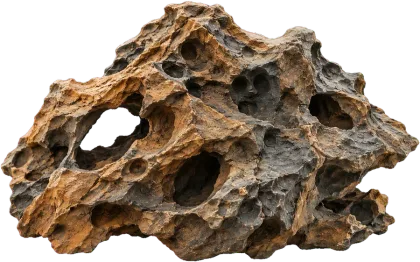
- 2Substrate, rocks and wood

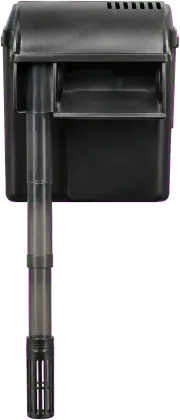
- 3Filter and heater in, unplugged
 Unplugged
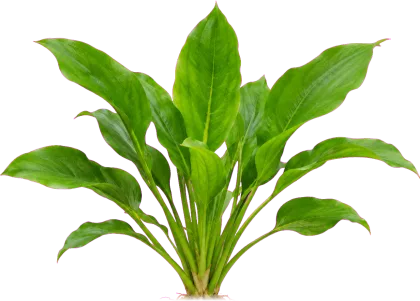
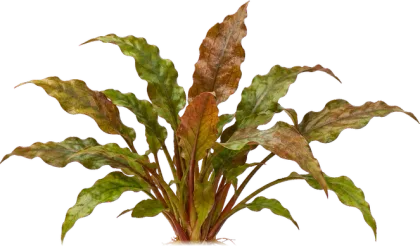
- 4Part-fill, then plant

 Unplugged
- 5Fill the rest slowlyUnplugged
- 6Filter on; heater after 20–30 minRunning
Illustration made from our aquarium game’s artwork, drawn to scale for a 10-gallon tank. The numbers match the steps below.
- Place the tank on a level, sturdy stand away from sun and vents. It is heavy once it's full (about 10 pounds per gallon), and sun or drafts swing the temperature.
- Rinse the substrate, rocks and wood, then add them. Rinsing stops cloudy water, and placing them before any water goes in lets you move them freely.
- Fit the filter and heater, but leave them unplugged. They only need to sit in place so you can hide them behind decor.
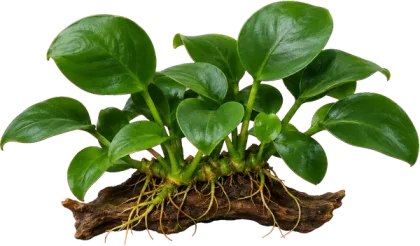
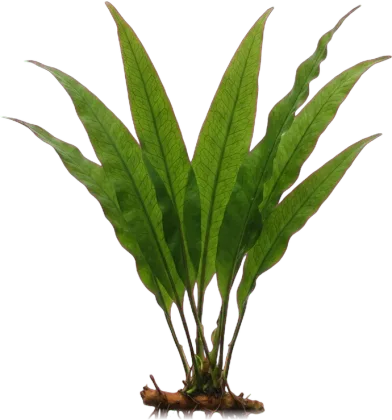
- Part-fill with conditioned water, then plant if you're using live plants. Lower water holds the leaves up while you plant them.
- Fill the rest of the tank slowly. Pouring gently onto a plate or bowl keeps the water from digging up your substrate and plants.
- Switch on the filter first, then wait 20 to 30 minutes before plugging in the heater. The heater needs time to match the water temperature, or it can crack, and it must stay under water.
- Start cycling, and use your test kit and the cycling guide to know when the tank is ready. A tank isn't safe for fish just because it's running.
Sources
aqueon.com: “An aquarium filled with water, gravel and decorations weighs approximately 10 lbs per gallon.”
aquariumcoop.com: “don’t place the aquarium in direct sunlight, next to the air conditioning and heating vent”
aqueon.com: “An aquarium filled with water, gravel and decorations weighs approximately 10 lbs per gallon”
aquariumcoop.com: “so rinse them in water to avoid getting cloudy water.”
aquariumcoop.com: “Before you add any water, spend time moving around the hardscape and plotting out where the plants will go.”
aquariumcoop.com: “The heater and filter are not turned on at this step but are merely positioned in the tank so that you can use the plants and decorations to hide them.”
aqueon.com: “Do not plug the heater in yet.”
aqueon.com: “Fill the aquarium about halfway with room temperature water that has been treated with water conditioner.”
aquariumcoop.com: “the lowered water level helps to support the plant leaves while you are planting them so that they do not bend too much and break”
aqueon.com: “Place a plate or saucer on the bottom to avoid stirring the gravel as the water enters.”
aquariumcoop.com: “pour the water through a colander or onto a plastic bag or bowl to avoid disturbing your aquascape design.”
aquariumcoop.com: “The heater requires time to adjust to the water temperature.”
aquariumcoop.com: “the heater must always be submersed in water when it’s turned on.”
aquariumcoop.com: “let the equipment acclimate to the aquarium water’s temperature for 20 to 30 minutes before plugging it in, to prevent breakage from temperature shock”
aquariumcoop.com: “Start cycling the aquarium (e.g. growing beneficial bacteria and/or live plants to make a safe environment for fish to live in)”
aquariadise.com: “testing during this time is vital to find out if the beneficial bacteria are making progress”
What happens next
The weeks between setup day and your first fish. The cycling guide has the details.
- Start the cycle on day one, with no fish in the tank. For the measured ammonia method used below, dose aquarium ammonium chloride according to its label for your water volume. A full dose means that measured label dose, not a pinch of fish food.
- Test the water every few days for ammonia and nitrite, and note the numbers.
- Ready when: For this check, use aquarium ammonium chloride at the dose on its label for your water volume. If you grew the bacteria with fish food, use measured ammonium chloride for this final check; adding food is not a measured ammonia dose. The tank turns a full dose of ammonia into nothing within a day: 24 hours after dosing, ammonia and nitrite read zero and nitrate is present. Keep adding the ammonia source until the fish go in, or the bacteria starve. Is your tank ready?
- Then: Whichever route you used, add fish a few at a time, feed sparingly, and test every few days for the first weeks: ammonia and nitrite should stay at 0 ppm and nitrate below 40 ppm. If ammonia or nitrite show up, stop adding fish, feed less and do a partial water change.
Sources
buceplant.com: “Beneficial bacteria then consume the ammonia produced by the decaying fish food or other ammonia source”
store.drtimsaquatics.com: “Please see the label on your bottle to determine how much to use.”
pond-planet.co.uk: “Using an aquarium test kit, check your tank water every few days to measure the levels of ammonia and nitrite present”
freshwatersystems.com: “If ammonia levels are undetectable after 24 hours, nitrites are undetectable, and nitrates are present, the tank has completed its cycle.”
buceplant.com: “You can expect it to take anywhere from a few weeks to a few months to fully cycle a new tank”
store.drtimsaquatics.com: “Please see the label on your bottle to determine how much to use.”
aquariumcoop.com: “Gradually add a few fish, feed them sparingly, and use water test strips to ensure that ammonia and nitrites are at 0 ppm and nitrates are below 40 ppm.”
Next steps
How we got the prices
From the product pages of a large US pet store chain, checked November 16, 2026, for the size that fits each tank. Prices vary by store and change often, so treat them as a rough guide. We don’t link to stores, earn nothing from purchases and don’t recommend brands.
Sources
- Setting up your first fish tank - Practical Fishkeeping (practicalfishkeeping.co.uk)
- New Fish Checklist: How to Set Up a Fish Tank for Beginners (aquariumcoop.com)
- Setting Up a Freshwater Aquarium (aqueon.com)
- Beginner Fish Tank Gear: What You Need vs. Don’t (aquariumsource.com)
- How to Choose the Right Aquarium Heater | Fish Tank Heaters 101 (aquariumcoop.com)
- Step-by-step Guide to Setting Up a Planted Aquarium (liveaquaria.com)
- The Best Aquarium Test Kits Available on the Market Today (aquariadise.com)
- How to Set Up a Low Tech Planted Aquarium for Beginners (aquariumcoop.com)